
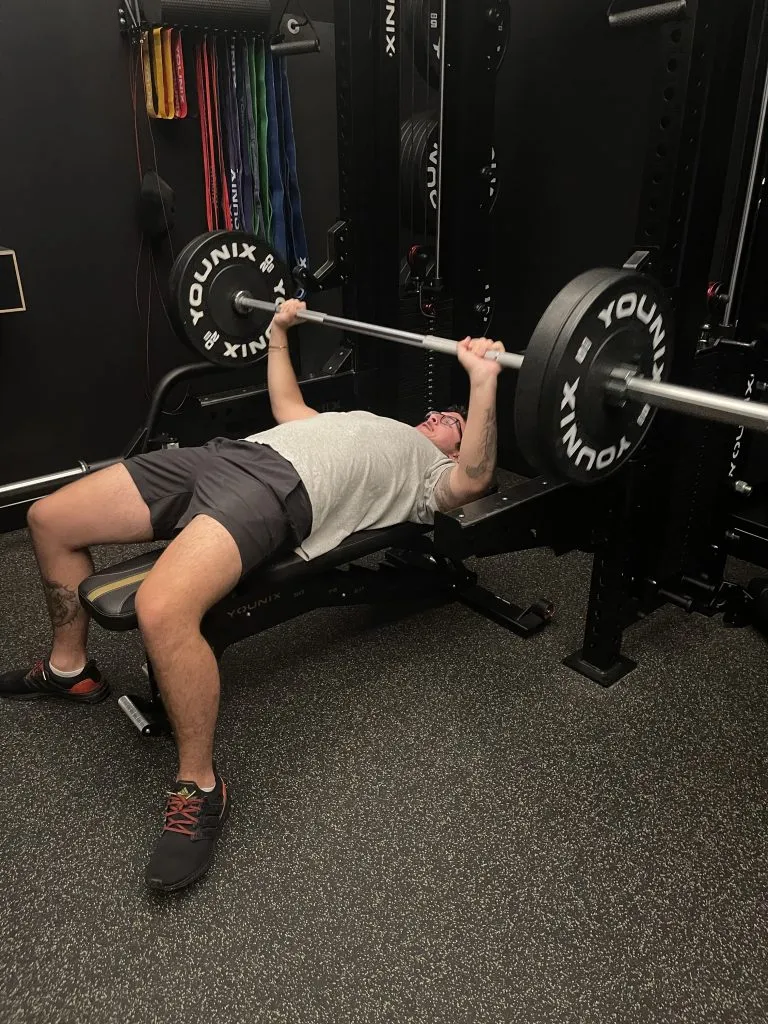
Ozempic, Wegovy, Zepbound and Mounjaro can be very effective for weight loss. Strength training helps you keep muscle, so more of what you lose is fat. I’m Grant Denney, an NCSF-certified personal trainer in Carmel, and I work with clients on GLP-1 medications to help make sure as much of the weight coming off as possible is fat — not the muscle that keeps you strong, keeps your metabolism up, and keeps the weight from coming back.
The problem nobody mentions at the pharmacy
GLP-1 medications are remarkably effective at reducing appetite. But when you eat far less without doing anything to protect your muscle, research suggests a meaningful share of the weight lost can be lean mass rather than fat. That matters more than it sounds:
- Your metabolism slows. Muscle is what burns energy at rest. Lose it, and you need less food to maintain — which makes regain more likely if you ever reduce or stop the medication.
- You get weaker, not just smaller. Stairs, carrying groceries, getting off the floor — everyday strength drops along with the number on the scale.
- Bone and balance take a hit. Especially for adults over 50 and women around menopause, losing muscle and bone at the same time raises the risk of falls and fractures.
- The result doesn’t look the way you expected. Losing muscle along with fat is why some people end up lighter but softer.
Strength training and adequate protein are the best-supported ways to hold on to as much muscle as possible while you lose weight. That’s exactly what I build for GLP-1 clients. (For the science in more depth, read my guide: how to keep your muscle while losing weight on a GLP-1.)
How I train clients on GLP-1 medications
- Start where your energy actually is. Low appetite often means low fuel, especially in the first weeks or after a dose increase. We assess your strength, mobility and injury history, then start with sessions that build you up instead of wiping you out.
- Strength first, cardio second. Two to three strength sessions a week on the big movements — squat, hinge, push, pull, carry — progressed steadily. Long cardio sessions burn calories you’re already short on; lifting tells your body to keep its muscle.
- Protein you can actually eat. When you’re not hungry, protein has to be deliberate. We set a daily target (the protein calculator has a GLP-1 option), split it across meals you can stomach, and lean on easy wins: Greek yogurt, eggs, shakes, lean meat in small portions.
- Track muscle, not just weight. Strength numbers, body measurements and periodic body-fat checks help us assess whether you’re keeping your muscle and how your body composition is changing. Everything is logged in the Ultimate You Fitness app, so we see the trend together.
- Plan for life after the medication. Whether you stay on it, taper, or stop, the muscle and habits we build are what keep the results. That’s the part the medication can’t do for you.
Working alongside your prescriber
I’m a strength coach, not a medical provider. I don’t advise on dosing, and I follow any guidance your prescribing provider gives you about exercise, nutrition or side effects. If something comes up that sounds medical — dizziness, persistent nausea, unusual fatigue — I’ll tell you to check with them. My job is the part they don’t have time for: making sure the weight you lose is the weight you want to lose.
Common questions
I’ve never lifted weights. Is that a problem?
Not at all — most of my GLP-1 clients haven’t. We start with what your body can handle today and build from there, with coaching on every rep. You don’t need to be in shape to start; that’s what the training is for.
I’m tired and barely eating. Should I wait until I feel better?
Usually no — the early months are typically when weight comes off fastest, so it’s a good time to protect your muscle. We just scale it: shorter sessions, fewer sets, timed around when you’ve eaten. Most clients find they have more energy once they’re lifting regularly and hitting their protein.
How much protein do I need?
It depends on your body weight and goals, but GLP-1 clients generally need to aim higher than they think — and spread it out, since big meals are hard. The free protein calculator gives you a starting number; we adjust it from there.
I already stopped the medication. Can you still help?
Yes. Coming off a GLP-1 is when strength training and good habits matter most — appetite returns, and muscle is what keeps your metabolism working in your favor. It’s never too late to rebuild what was lost.
Where do we train?
At my private studio in Carmel City Center, downtown at Indy Performance Authority, or in your home in Carmel, Westfield, Fishers or Noblesville — plus online coaching through the app.
Or call/text 765-571-1514. Training hours Monday–Friday, 5 am–6 pm.
This page is general information from a strength coach, not medical advice. GLP-1 medications are prescription drugs; follow your prescribing provider’s guidance on dosing, nutrition and exercise, and talk to them before starting a new program.
Sources
These are the studies and position statements behind the main claims on this page. They’re general research, not advice for your situation.
- Wilding JPH, et al. (2021). Once-weekly semaglutide in adults with overweight or obesity (STEP 1 trial). New England Journal of Medicine. doi.org/10.1056/NEJMoa2032183
- Neeland IJ, Linge J, Birkenfeld AL. (2024). Changes in lean body mass with glucagon-like peptide-1-based therapies and mitigation strategies. Diabetes, Obesity and Metabolism. doi.org/10.1111/dom.15728
- Morton RW, et al. (2018). A systematic review, meta-analysis and meta-regression of the effect of protein supplementation on resistance training-induced gains in muscle mass and strength in healthy adults. British Journal of Sports Medicine. doi.org/10.1136/bjsports-2017-097608
- American College of Sports Medicine. (2009). Progression models in resistance training for healthy adults (position stand). Medicine & Science in Sports & Exercise. doi.org/10.1249/MSS.0b013e3181915670