If you’re over 40, you’ve probably noticed things changing. The weight sits differently. Recovery takes longer. Your knees have opinions. And most of the advice out there is either “eat less and do more cardio” or “it’s just your age.”
It isn’t just your age. And the answer isn’t more cardio. For most women over 40, the single most effective thing you can do for your body, your energy and how you’ll feel at 60 and 70 is to get strong. That’s what I do with my clients in Carmel every week.
What actually changes after 40
- Muscle. Adults lose muscle every decade from around their 30s, and for women the pace tends to pick up through the menopause transition. Less muscle generally means a somewhat slower metabolism, less strength for everyday life, and a body that feels softer even at the same weight.
- Bone. Bone density drops too, fastest in the years around menopause. Strong bones are what keep a fall from becoming a fracture later on.
- Hormones. As estrogen shifts through perimenopause, many women notice more weight around the middle, poorer sleep, and slower recovery. Training and nutrition don’t change your hormones, but they change how your body responds to them.
- Recovery. You can still train hard, you just can’t train carelessly. Sleep, stress and recovery matter more than they did at 25.
Why strength training is the answer
Strength training is one of the most direct ways to stimulate and preserve muscle, and the mechanical load also helps keep bones strong. Done consistently, it:
- Rebuilds and protects muscle, so your metabolism works for you instead of against you
- Loads your bones, which is how they stay strong
- Shapes your body in a way cardio alone never will
- Makes daily life easier: carrying groceries, lifting grandkids, getting up off the floor
- Improves balance and confidence, which matters more every year
And no, you won’t get bulky. That look takes years of very specific training and eating. What you’ll get is strong, lean and capable.
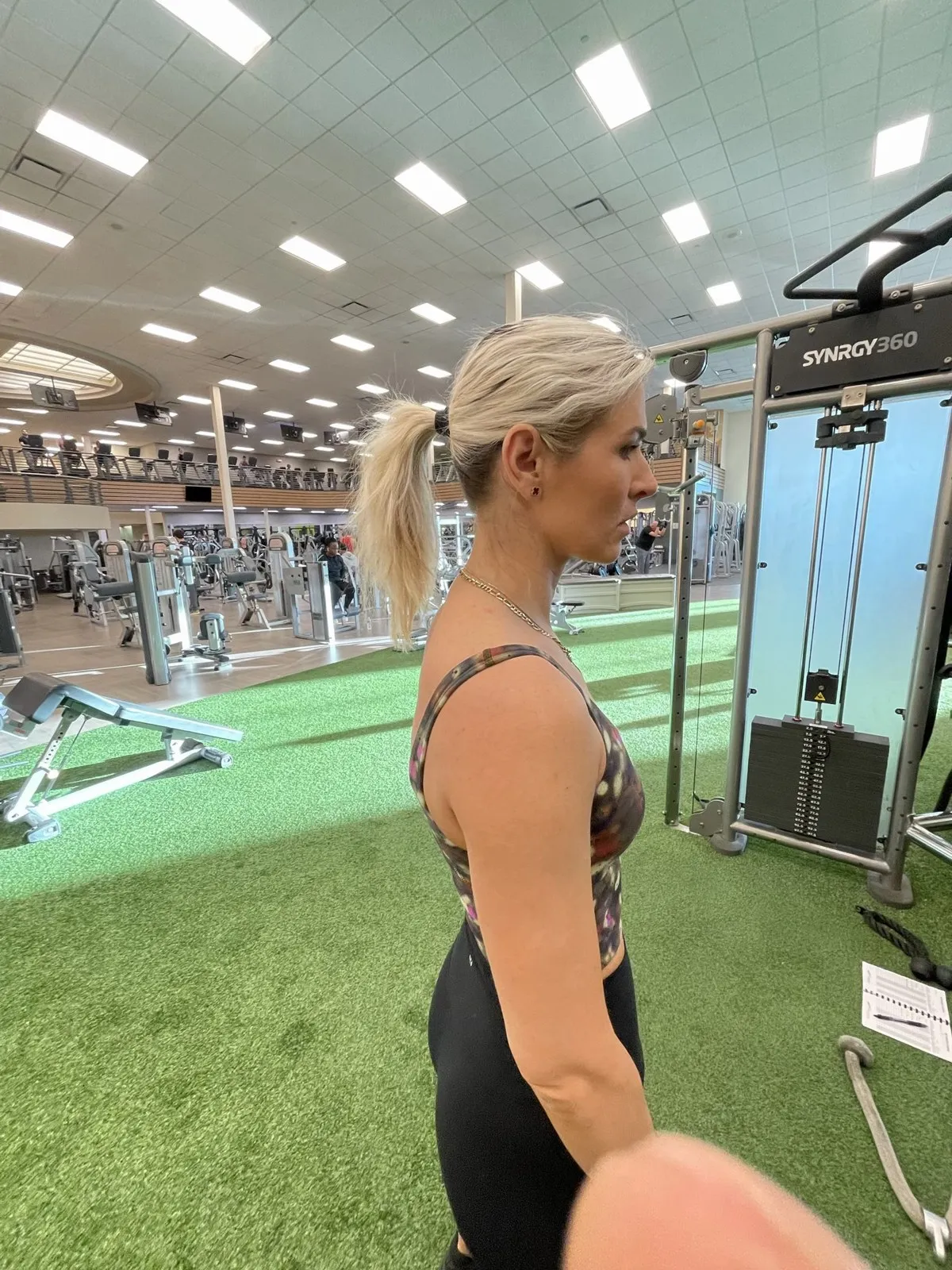
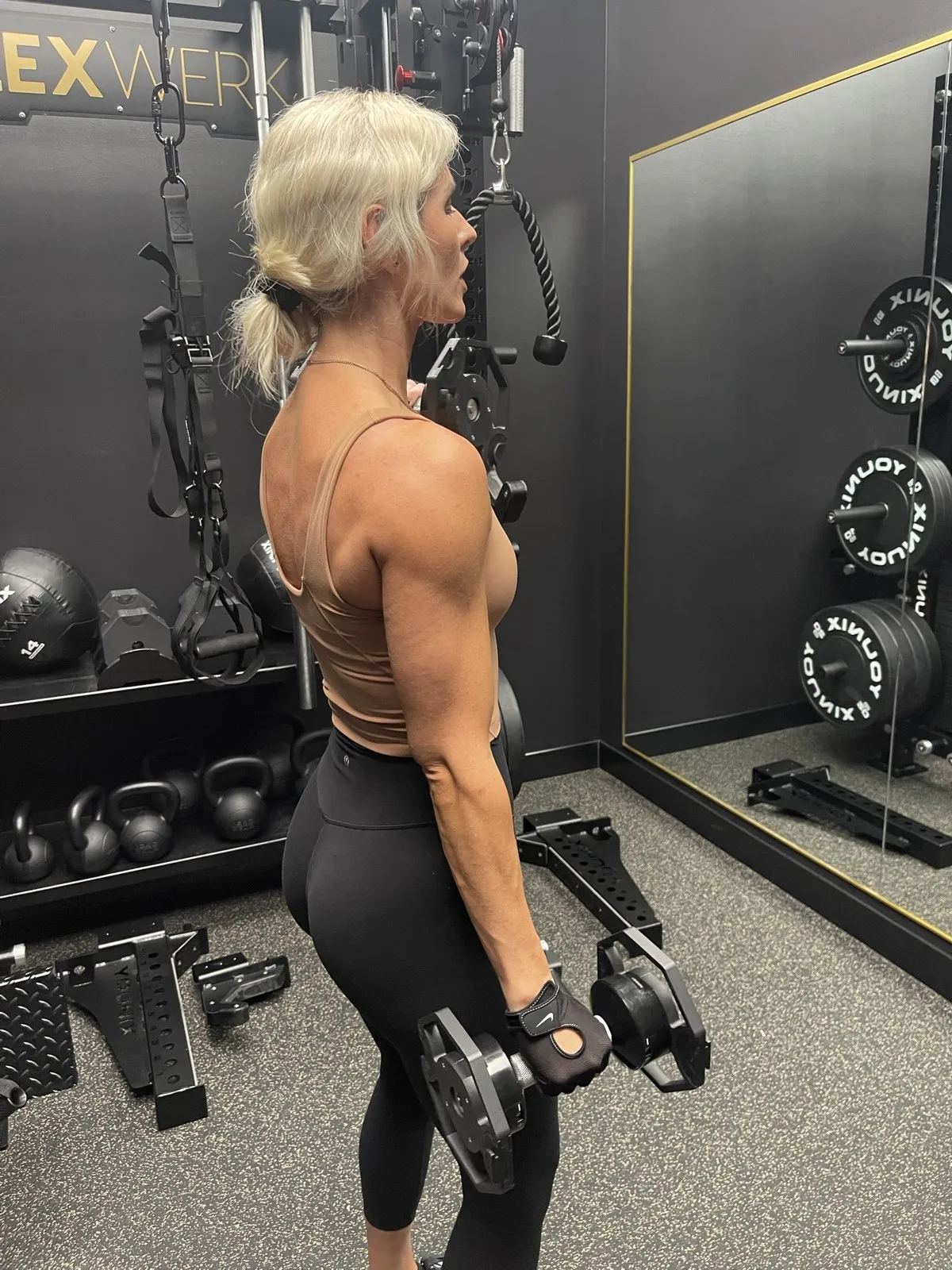
Yes, women build muscle after 40
This is what consistent strength training and a protein-first approach to eating can look like. No crash diet, no 1,200-calorie plan, no hours of cardio.
How I train women over 40
- Start where you are. Never lifted? Coming back after years off? Working around a knee, a shoulder or a back that complains? We build your program around what your body can do today and progress from there.
- Joint-friendly progressions. Every movement has an easier and a harder version. We pick the one that loads the muscle without aggravating the joint.
- Recovery is part of the plan. My app pulls in your sleep, heart-rate variability and how you’re feeling, so we know when to push and when to back off.
- Protein first, no extremes. We set a realistic protein target and build sustainable habits around it. Nothing banned, no starving. (Start with my nutrition basics guide.)
- Your program, on your phone. Every workout, set and rep is in the Ultimate You app, so you always know what to do and I can see how it went.
Questions I hear all the time
Is it too late to start?
No. Women build strength and muscle in their 40s, 50s, 60s and beyond. I train an 85-year-old client who hasn’t had a fall in two years. The best time to start was years ago; the second-best time is now.
What about my knees / back / shoulders?
Most of my clients come in with something that hurts. We work around it, and very often getting stronger around the joint is what makes it feel better. If you’re under a doctor’s or physical therapist’s care, we work within their guidance.
Do I need a special diet?
No special diet. Most women over 40 need more protein than they’re eating, and an honest look at portions. That’s usually the whole game.
How often do I need to train?
Two to three strength sessions a week is plenty to see real change. Consistency beats intensity every time.
Let’s build the strongest version of you
Whether you’re brand new, coming back, or tired of programs that don’t fit your life, I’d love to help. In-person in Carmel, Westfield, Fishers and Noblesville, or online anywhere.
Book a free consultation and we’ll start with where you are today.
Also see: Personal Training for Women in Carmel · Nutrition Basics
This page is general education, not medical advice. If you’re managing a medical condition, osteoporosis, an injury, or menopause-related symptoms, talk with your doctor before starting a new exercise program.
Sources
These are the studies and position statements behind the main claims on this page. They’re general research, not advice for your situation.
- Greendale GA, et al. (2019). Changes in body composition and weight during the menopause transition. JCI Insight. doi.org/10.1172/jci.insight.124865
- Finkelstein JS, et al. (2008). Bone mineral density changes during the menopause transition in a multiethnic cohort of women. Journal of Clinical Endocrinology & Metabolism. doi.org/10.1210/jc.2007-1876
- Watson SL, et al. (2018). High-intensity resistance and impact training improves bone mineral density and physical function in postmenopausal women with osteopenia and osteoporosis: the LIFTMOR randomized controlled trial. Journal of Bone and Mineral Research. doi.org/10.1002/jbmr.3284
- Westcott WL. (2012). Resistance training is medicine: effects of strength training on health. Current Sports Medicine Reports. doi.org/10.1249/JSR.0b013e31825dabb8
- Morton RW, et al. (2018). A systematic review, meta-analysis and meta-regression of the effect of protein supplementation on resistance training-induced gains in muscle mass and strength in healthy adults. British Journal of Sports Medicine. doi.org/10.1136/bjsports-2017-097608