
No single number tells the whole story of your body. Weight, measurements, scans, and photos each show a different piece, and each one is misleading when you look at it alone. That’s why I use all of them together. When they point the same way, you can trust it. When one looks off, the others usually explain why.
1. The scale: every morning, judged by the weekly average
Weigh yourself every morning on a smart scale, right after you wake up, after using the bathroom and before eating or drinking. Same conditions every day means the numbers can be compared.
Then ignore the daily number. Your weight can swing by a few pounds from one day to the next because of water, salt, carbohydrates, digestion, hormones, and sleep, none of which is fat. What matters is your weekly average. A smart scale or its app can calculate it for you, and the trend across weeks tells us whether things are moving in the right direction.
It can sync automatically. If your smart scale sends your weight to your phone’s health app (such as Apple Health) and you’ve connected the Ultimate You Fitness app to it, your weight flows into the app on its own, with nothing to type in. I can then see your trend and weekly average when we check in.
2. Body measurements: the tape measure
A tape measure shows changes the scale can’t, such as a smaller waist while your weight stays the same because you’re also building muscle. Measure the same spots each time, such as waist, hips, chest, arms, and thighs, at the same time of day and relaxed, without sucking in. Every 2 to 4 weeks is plenty.
3. Body composition scans: DEXA and Bod Pod
A DEXA scan or a Bod Pod estimates how much of your body is fat and how much is lean mass. DEXA also measures bone density. These give the most detailed picture, but they’re a snapshot, not a daily tool.
- Use the same type of scan, and ideally the same machine, each time. Different machines give different numbers.
- Prepare the same way each time, including hydration and how long since you last ate or trained.
- Space scans several months apart. Changes over a few weeks are too small to separate from measurement error.
4. Progress photos
Take photos from the front, side, and back in the same spot, with the same lighting, the same pose, and the same time of day. Every 2 to 4 weeks works well.
What to wear: fitted clothing that shows your shape, but nothing compressive. Tight shapewear, compression gear, and anything that squeezes or smooths can change how your body looks in the photo. Loose clothing hides changes, so skip that too. Wear the same outfit every time, such as athletic shorts and a sports bra or a fitted tank, so what changes is your body and not your clothes. Take the photos barefoot, take off jewelry and a bulky watch, and pull long hair back so it doesn’t hide your shoulders or back.
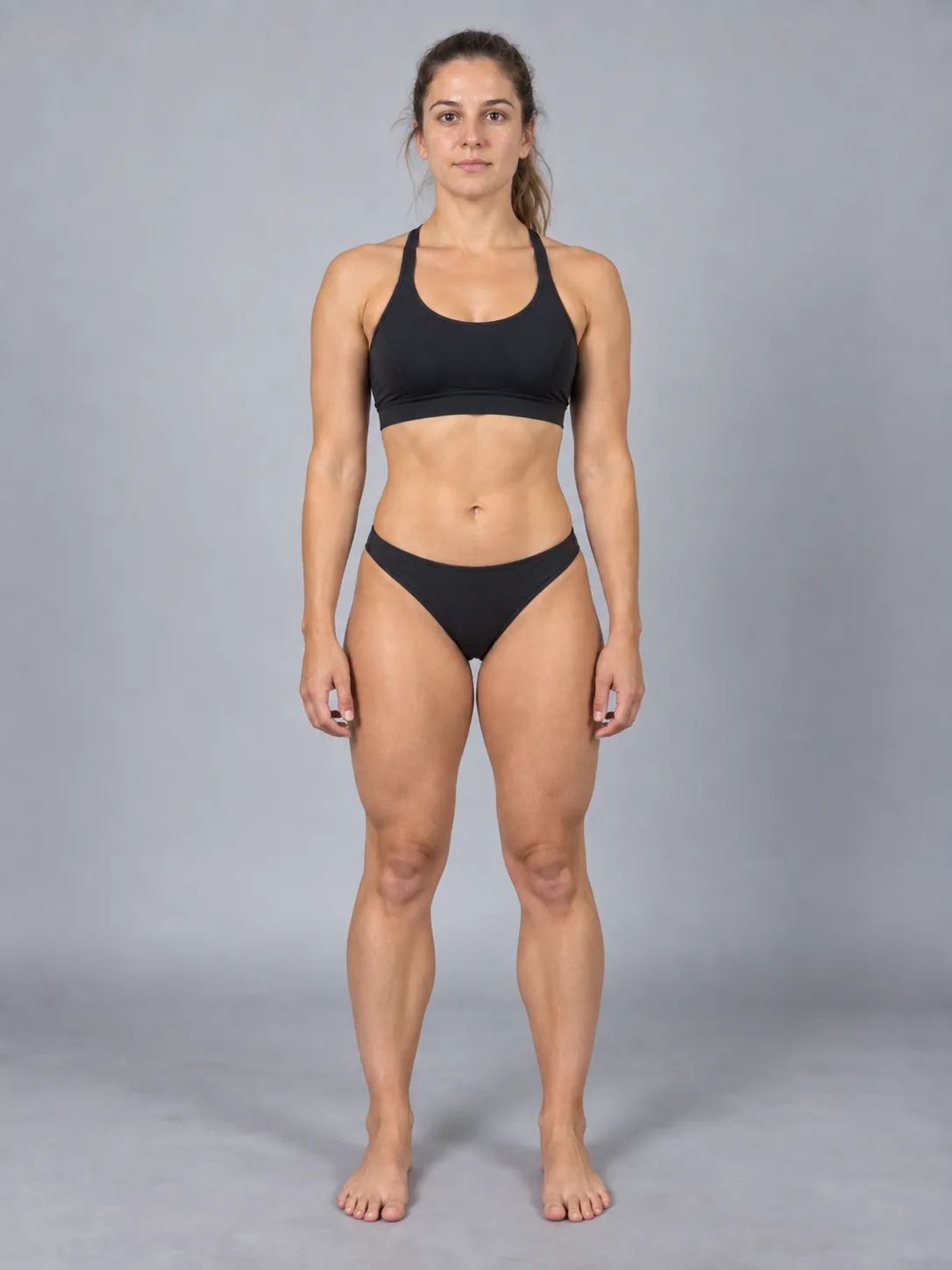
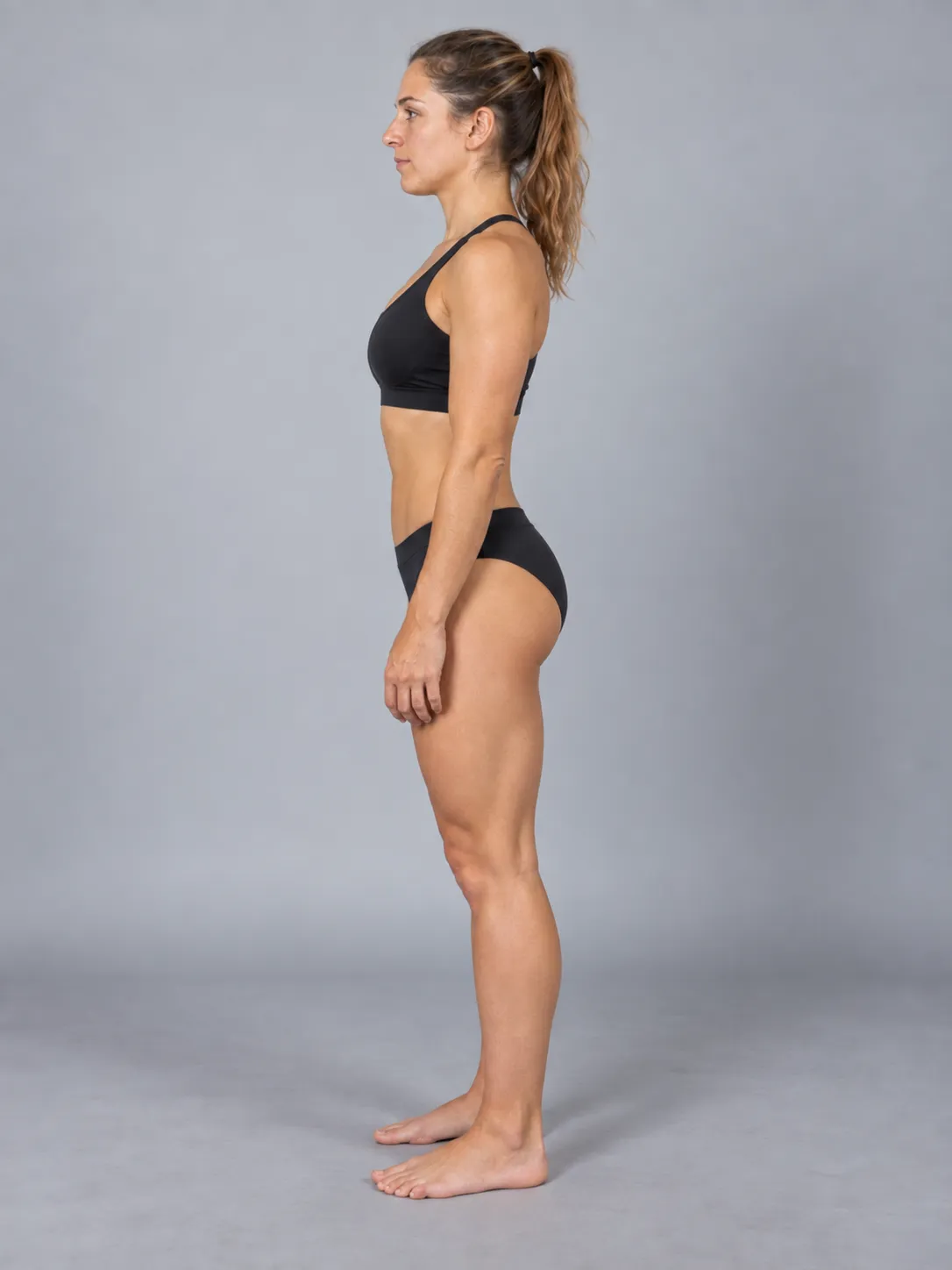
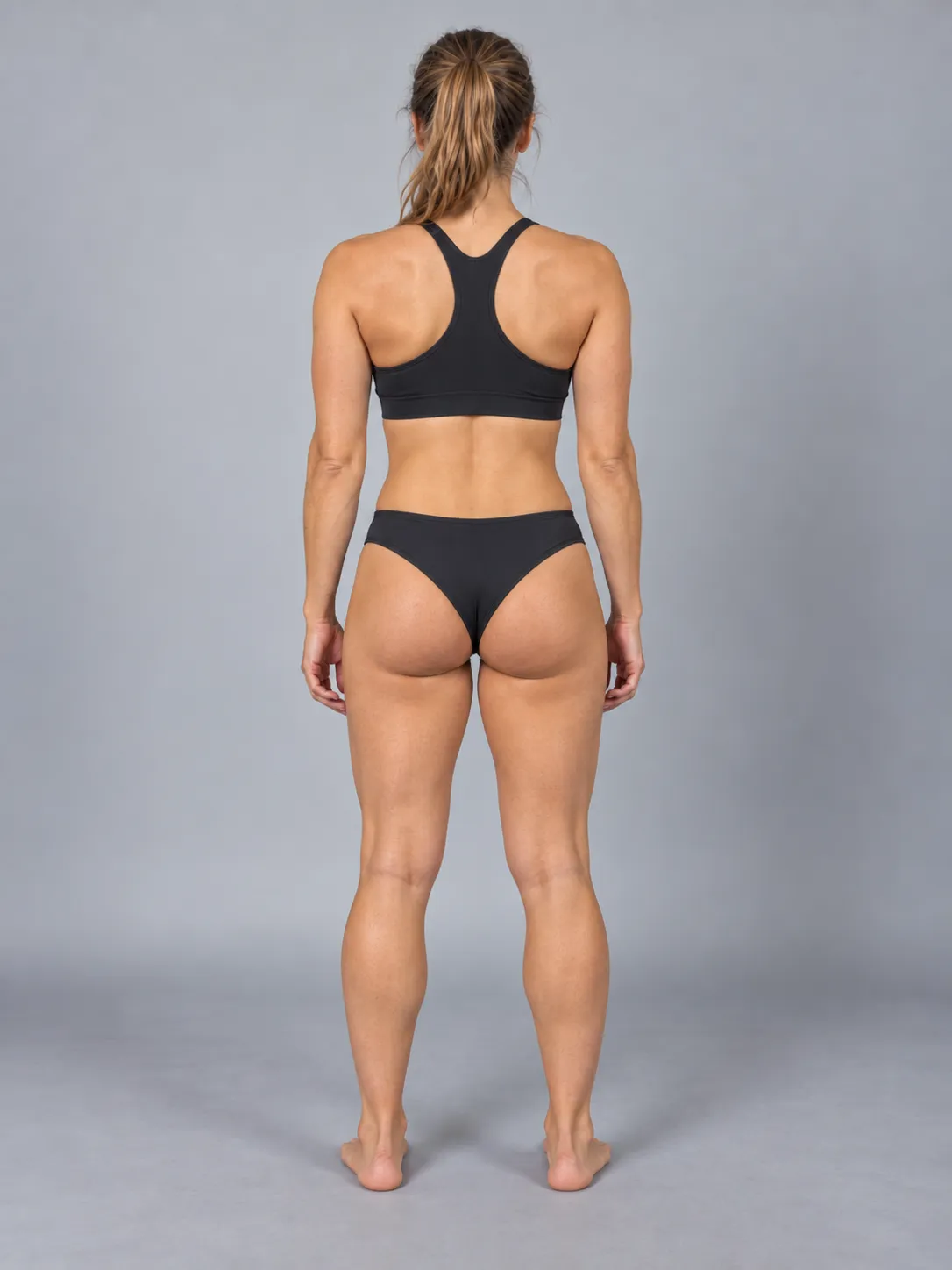
Example poses. Stand relaxed with your arms at your sides, feet about hip-width apart, looking straight ahead. Wear fitted but not compressive clothing, and use a plain background.
Why photos matter so much
- You can’t see change in the mirror. You look at yourself every day, so gradual changes are invisible to you. A photo from 8 weeks ago makes them obvious.
- They show what numbers miss. When you lose fat and gain muscle at the same time, the scale can barely move while your shape changes a lot.
- They fix a distorted view of yourself. How we feel about our bodies changes day to day. Photos give an honest record to look at when motivation dips.
- They’re what you’ll remember. In a year, you’ll care how you look and feel, not what the scale said on a random Tuesday.
The limits of every method
Every one of these tools is useful, and every one has errors. Knowing where they go wrong keeps you from over-reading a single result.
InBody and smart scales
InBody machines and most smart scales use bioelectrical impedance. They send a tiny electrical current through your body and measure how easily it passes. Water conducts the current and fat doesn’t, so the device estimates your body water and then calculates fat and muscle from that. The result depends heavily on hydration. Eating, drinking, a hard workout, a sauna, a long flight, or a salty dinner can all change your reading within hours. Smart scales send the current through your feet only, so they’re less accurate than a full InBody, which uses your hands as well.
How to use them: trust the trend, not the single reading. A smart scale’s body-fat percentage is a rough estimate. Its weight reading is far more reliable, so I mainly use the scale for weight and the weekly average.
Bod Pod
The Bod Pod measures how much air your body displaces, which gives your body volume. Combined with your weight, it estimates your density and then your body-fat percentage. It relies on assumptions about how dense lean tissue is, and those assumptions are less accurate if your hydration is unusual. Tight clothing, a swim cap, trapped air in your hair, sweat, and recent exercise can also change the result.
DEXA
DEXA uses low-dose X-rays to separate fat, lean tissue, and bone, and it’s often called the gold standard. It’s still an estimate. Hydration, recent food, how you’re positioned on the table, and the machine and software version can all shift the numbers. Two DEXA scans a few weeks apart can differ by more than the real change in your body, and different methods often disagree with each other by a few percentage points.
The rule for all of them: pick one method, use the same machine under the same conditions each time, and compare it only with itself. Never compare a DEXA number with a Bod Pod or InBody number.
Why we don’t panic when the numbers don’t move the way we want
- Your body isn’t a straight line. Weight and measurements go up and down around a trend. A flat week or a small rise doesn’t mean your plan stopped working.
- Water hides fat loss. A new training block, harder workouts, more salt or carbs, stress, poor sleep, and your hormonal cycle all make your body hold water. You can be losing fat while the scale holds steady or even rises.
- Muscle and fat change at once. You can gain muscle while losing fat, so weight and body-fat percentage may barely move while your shape changes.
- The error can be bigger than the change. Over a few weeks, the real change in your body can be smaller than the measurement error of any scan or smart scale.
- Panic leads to bad decisions. Cutting food sharply or changing a working program because of one reading usually costs you progress.
So we look at the trend over several weeks, across all of the methods together, along with what you can do in the gym. If your strength is going up, your photos are changing, and your measurements are moving, you’re making progress, even if one number looks off. If the trend stalls across everything for several weeks, that’s when we adjust the plan together.
Why we use all of them
Each method has a weakness, and the others cover it:
- The scale can’t tell fat from muscle or water.
- The tape measure shows where your body is changing, but small errors can add up.
- Scans are precise but infrequent, and they vary by machine and conditions.
- Photos are subjective, but they show the real change.
The numbers can be hard to understand, and that’s expected. You don’t have to interpret them alone. I’ll look at the full picture with you and tell you what’s working and what to change.
Sources
These are the studies and position statements behind the main claims on this page. They’re general research, not advice for your situation.
- Nana A, et al. (2015). Methodology review: using dual-energy X-ray absorptiometry (DXA) for the assessment of body composition in athletes and active people. International Journal of Sport Nutrition and Exercise Metabolism. doi.org/10.1123/ijsnem.2013-0228
- Kyle UG, et al. (2004). Bioelectrical impedance analysis — part I: review of principles and methods. Clinical Nutrition. doi.org/10.1016/j.clnu.2004.06.004
- Kasper AM, et al. (2021). Come back skinfolds, all is forgiven: a narrative review of the efficacy of common body composition methods in applied sports practice. Nutrients. doi.org/10.3390/nu13041075