
Your glutes are the biggest, most powerful muscle group you own — and most people barely use them. Long hours of sitting can reduce hip mobility and leave the glutes contributing less, and other areas often pick up the slack: the low back works harder, the knees drift inward, balance gets shaky, and the movements that should feel strong start to feel like effort. Glute and hip training isn’t a “look better in jeans” niche. It’s the foundation of how you stand, walk, lift, climb stairs and stay on your feet — and it’s one of the first things I assess with every client, from first-time lifters to athletes to clients in their 80s.
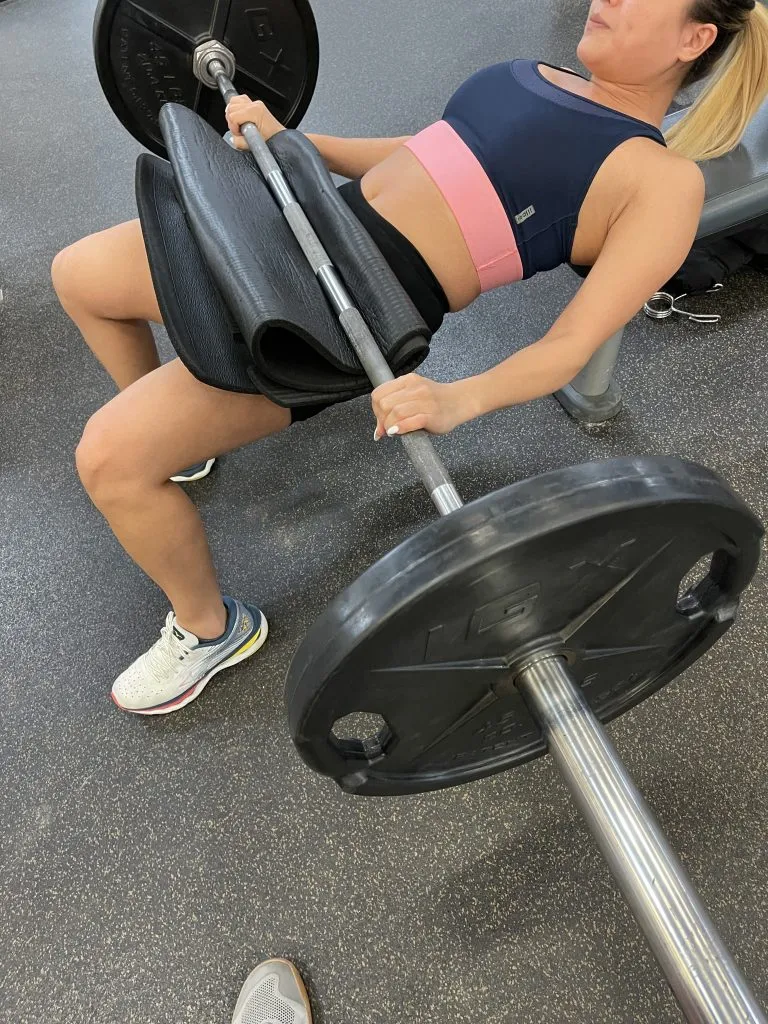
Why glutes and hip mobility matter — for everyone
I’ll cover the appearance side further down, because it matters to a lot of people and I’m not going to pretend otherwise. But the reasons I prioritize hips and glutes have more to do with how your body holds up over decades than how it looks this summer.
Low-back pain
The glutes’ main job is hip extension — driving the hips forward when you stand up, walk, climb or lift. When they’re weak, the lower back often ends up doing more of that work. It’s a pattern I often see alongside the “my back is tight after yard work” and “my back aches after a long walk” complaints I hear. Fix the hinge, strengthen the glutes, and the back stops being the hero.
Knee pain
The hip has a big influence on where the knee goes. Weak glutes — especially the side glutes that control rotation — let the knee collapse inward on squats, stairs and landings, and that pattern can contribute to knee irritation — so it’s something I check with anyone who has knee pain. I’ve had my own knee rebuilt, so this one is personal: strong, well-controlled hips are the best knee insurance you can buy.
Balance and staying on your feet
For adults over 50 this is the big one. Weak hips and poor balance are both linked to a higher risk of falling, and strong glutes and hips help you recover when you trip. My oldest client is 85 and hasn’t fallen in over two years — hip and glute work is a big part of her program.
Posture and the desk-job body
Long hours of sitting can leave the front of the hips feeling tight and the glutes contributing less. The result is the forward-tilted pelvis, flat glutes and tight-feeling hamstrings that most office workers walk around with. Mobility work opens the front of the hip; strength work wakes the back of it up. You need both.
Power — running, jumping, kicking, lifting
Every athletic movement starts at the hips. Sprinting, jumping, a golf swing, a heavy deadlift, a Muay Thai kick (I train it myself, and hip drive is everything) — the glutes are the engine. If you want to be faster or stronger at anything, this is where the horsepower comes from.
Keeping muscle while you lose weight
If you’re losing weight on a GLP-1 medication or in a steady calorie deficit, it’s worth protecting your biggest muscle group — losing muscle there can cost you a lot of everyday strength. Loading the glutes and hips is non-negotiable in a fat-loss program.
And yes — the appearance part
Plenty of my clients, women and men, want their glutes to look better. That’s a fine goal and I’ll help you get there. The honest version: shape comes from muscle, and muscle comes from progressive load — hip thrusts, split squats, deadlift variations and step-ups that get heavier over months — not from 100-rep band circuits or anything “toning.” Nobody accidentally gets bulky. What happens instead is you get stronger, your posture changes, and the shape follows. If you’re a woman who’s been told to stick to light weights, read this.
How I assess your hips
Before anyone loads a bar, I want to know what the hips can actually do. I run the standard range-of-motion and mobility screens — how far the hip flexes, extends and rotates on each side, whether the front of the hip is restricting the back from working, and whether left and right match. Then I look at your hinge pattern: can you push the hips back and load the glutes and hamstrings without the lower back rounding or taking over? From there we watch how you squat, step and balance on one leg. That ten minutes tells me where to start and what to leave alone for now — it’s the difference between a program built for your body and one copied off the internet.
What good glute and hip training looks like
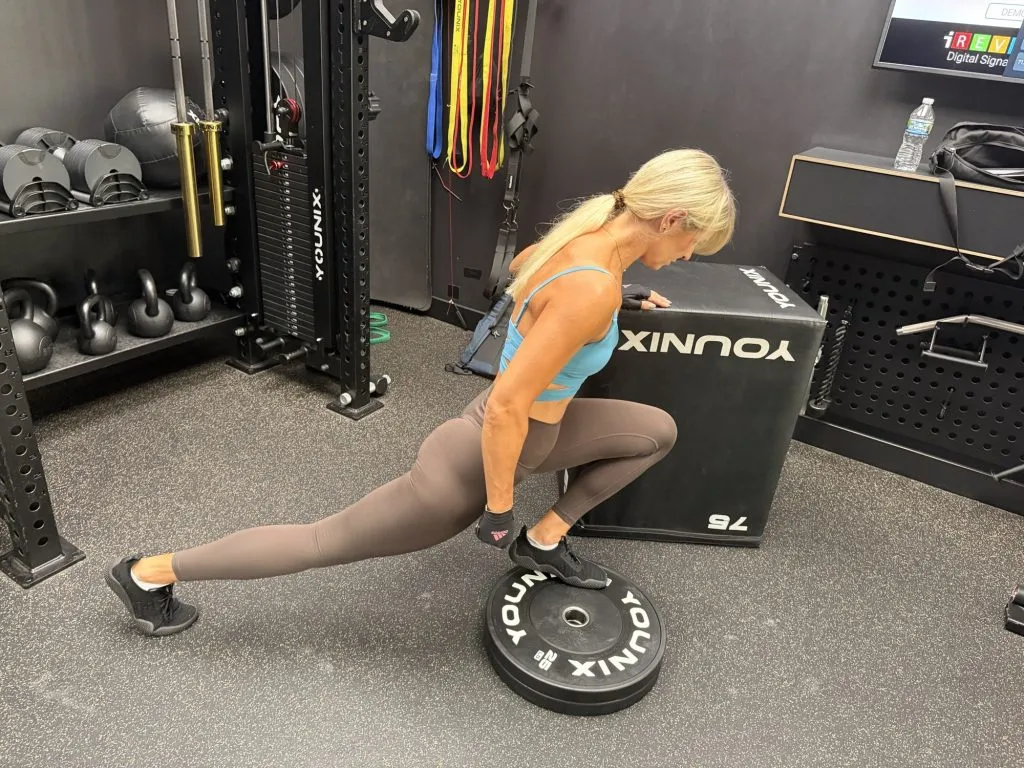
- Mobility first. Open the front of the hip and restore range: ATG split squats, 90/90 work, hip flexor and adductor stretching that’s actually loaded, not just held.
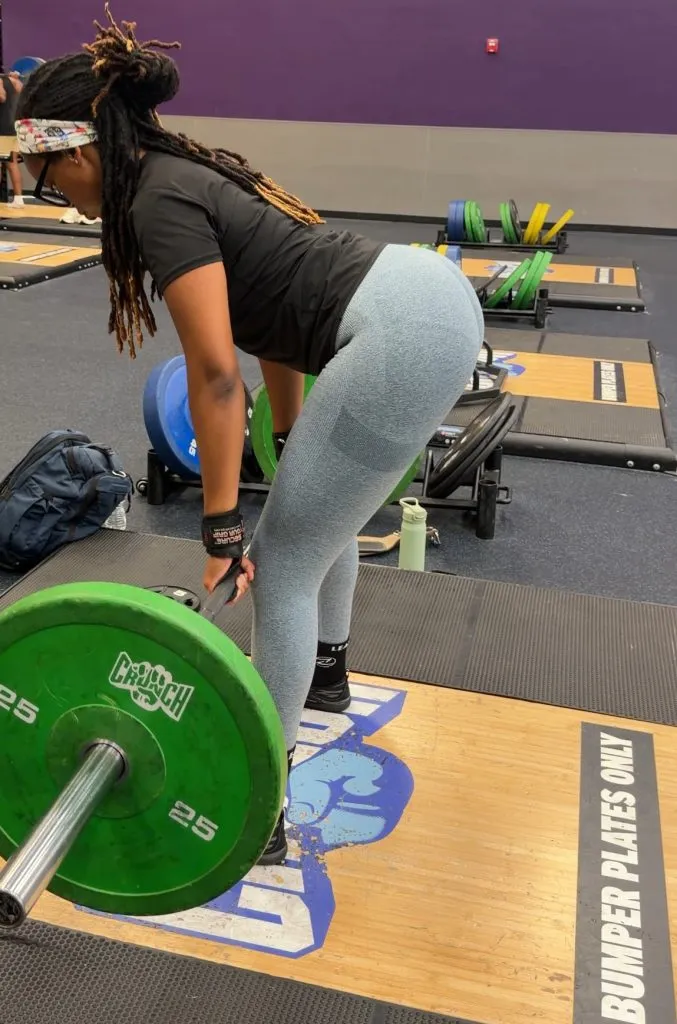
- Own the hinge. Learn to push the hips back and feel the glutes and hamstrings load — with a dowel, then a kettlebell, then a bar.
- The big movers. Hip thrusts and glute bridges, Romanian deadlifts, split squats and lunges, step-ups, and a squat variation that fits your knees.
- The side glutes. Lateral band walks, side-lying work and single-leg balance — small muscles, huge payoff for knees and stability.
- Progress it. More weight, more reps or harder variations over weeks and months. Everything is logged in the Ultimate You Fitness app, so we both see the trend.
Signs your glutes aren’t doing their job
- Your hamstrings cramp or your lower back tightens during glute bridges
- Your knees cave inward when you squat, land or climb stairs
- Your back is what feels “worked” after walking, hiking or yard work
- You can’t balance on one leg for 30 seconds without wobbling
- The front of your hips always feels tight, no matter how much you stretch
Two or more of those is a good reason to give your hips and glutes extra attention in your assessment. For the longer version of each sign and the fix, read 5 Signs Your Glutes Aren’t Working.
Common questions
Can I train glutes with a bad knee or back?
Usually, yes — and often it’s part of the fix. Hip thrusts and bridges load the glutes with almost no knee stress, and a well-coached hinge is one of the best things you can do for a cranky back. We start with what your body tolerates today and build from there. I’ll never push you through pain to make a session feel hard.
How long until I notice a difference?
Strength and “I can feel my glutes working” usually show up within 2–4 weeks. Visible change takes longer — think 3–6 months of consistent, progressive training with protein handled (the protein calculator will give you a target).
Isn’t glute training just for women?
No. Men’s low backs, knees and hips fail for exactly the same reasons, and men are usually worse at training them. Every program I write — men, women, 20s to 80s — has dedicated hip and glute work in it.
Do I need a gym?
Not to start. Bodyweight bridges, split squats, step-ups and band work go a long way, which is why this works well for in-home sessions. Eventually you’ll want real load — a barbell hip thrust or heavy RDL — and that’s what the studio is for.
The consultation includes the hip assessment described above. Call/text 765-571-1514 or book online. Training in Carmel, Indianapolis, Westfield, Fishers and Noblesville, in-home and online.