Your glutes are the biggest muscle group you have. They’re also, for most adults who sit for a living, the laziest. The problem is that “my glutes aren’t working” doesn’t feel like anything — it shows up somewhere else, as a tight back, a cranky knee, or hamstrings that cramp the second you try a bridge. Here are the five signs I see most often in new clients at my Carmel studio, what each one usually means, and what to do about it.
1. Your lower back is what feels “worked”
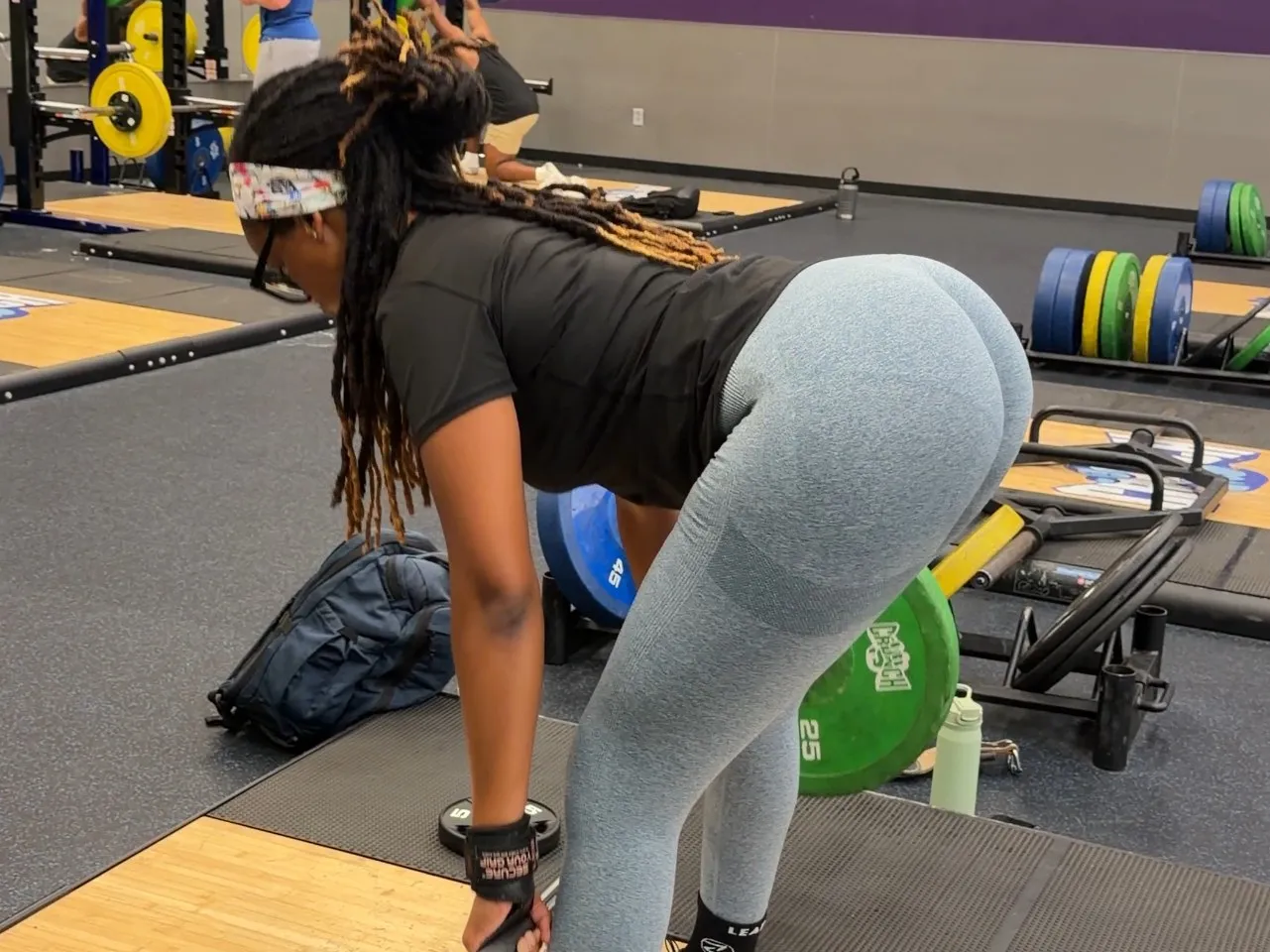
After a long walk, a hike, yard work, or a set of deadlifts, it’s your lower back that’s tired — not your glutes or hamstrings. That’s the classic sign. The glutes’ main job is hip extension: driving the hips forward when you stand up, walk or lift. When they don’t contribute enough, the lower back often extends to compensate, and your back ends up doing a job it isn’t built for. Fix: learn the hinge. Push the hips back with a flat spine until you feel the hamstrings load, then drive the hips forward and squeeze the glutes at the top. Start with a dowel against your back, then a kettlebell, then a Romanian deadlift.
2. Your hamstrings cramp during glute bridges
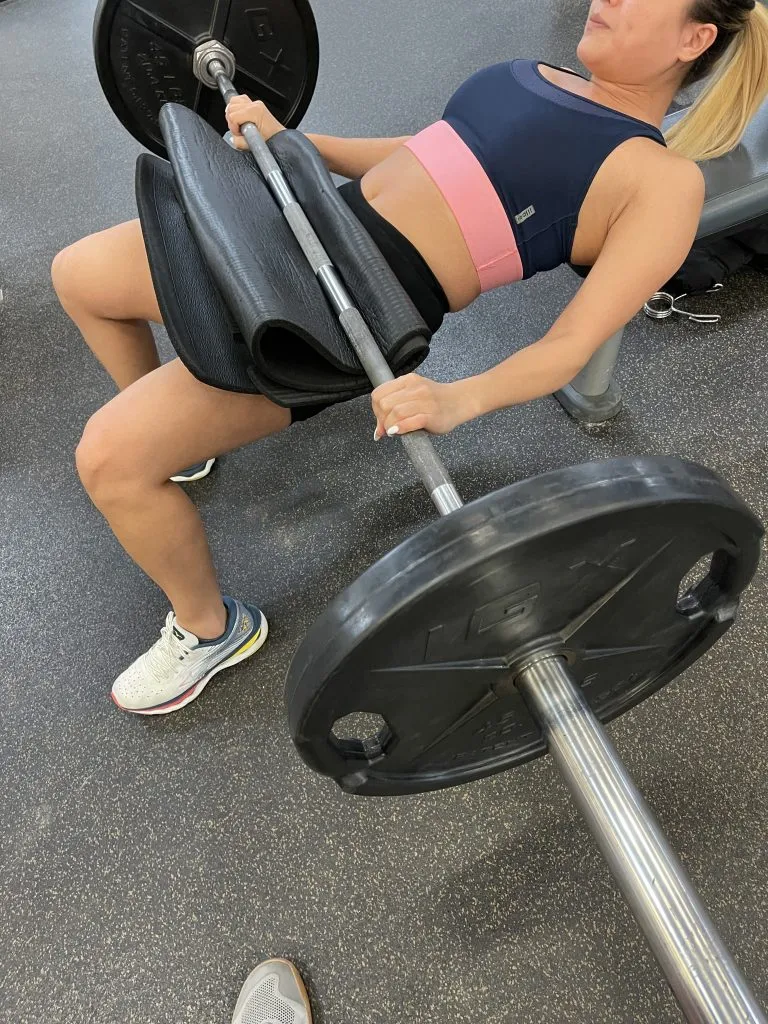
Lie on your back, knees bent, and lift your hips. If your hamstrings seize up before your glutes feel anything, the hamstrings are likely doing more of the work than your glutes. Fix: move your feet closer to your hips, push through your heels, and think “squeeze the glutes” rather than “lift the hips.” Hold the top for a few seconds. Once you can feel the glutes doing the work, progress to a loaded hip thrust — the single most direct way to strengthen them.
3. Your knees cave inward when you squat, climb stairs or land
Watch your knees in a mirror during a bodyweight squat, or notice them on stairs. If they drift toward each other, your side glutes — the gluteus medius — aren’t controlling the hip’s rotation. Over time it can contribute to knee problems, which is why it’s one of the first things I look at with anyone who has knee pain. Fix: lateral band walks, side-lying leg raises, and single-leg work (split squats, step-ups) where you focus on keeping the knee over the middle of the foot. These are small muscles with a huge payoff.
4. You can’t balance on one leg for 30 seconds
Stand on one foot. If you’re wobbling or grabbing the counter well before 30 seconds, the hip on the standing leg isn’t stabilizing — and hip weakness and poor balance are both linked to a higher risk of falling. For adults over 50 this is the sign I take most seriously, because weak hips and poor balance are linked to a higher risk of falling. Fix: practice the stand itself daily (near something to hold), then add single-leg Romanian deadlifts and step-ups. Balance improves fast when the hip gets strong.
5. The front of your hips always feels tight
You stretch your hip flexors constantly and they’re tight again by lunch. That usually isn’t a flexibility problem — it’s the glutes being too weak to hold the pelvis in a good position, so the hip flexors stay on guard. Stretching alone often isn’t enough. Fix: open the front of the hip with loaded mobility work (an ATG split squat is my favorite), and strengthen the back of it at the same time. Strong glutes let tight hip flexors finally relax.
Two or more of these?
Then your hips and glutes deserve extra attention in your assessment — alongside, not instead of, looking at the back pain, the knee pain or the “I just need to stretch more” theory. Glute and hip training isn’t about appearance — although that comes too — it’s about a back that holds up, knees that track, balance that keeps you independent, and the power behind every athletic thing you want to do. I wrote up why it matters for everyone and how I assess hips if you want the longer version, and the free consultation includes that assessment.
If you’re in Carmel, Indianapolis, Westfield, Fishers or Noblesville, book a free consultation or call/text 765-571-1514 and we’ll find out what your glutes are actually doing.